

Breaking News
Maduro, Venezuela, and USA :Bangladesh Must Rethink Security in an Age of “Law Enforcement Extractions”


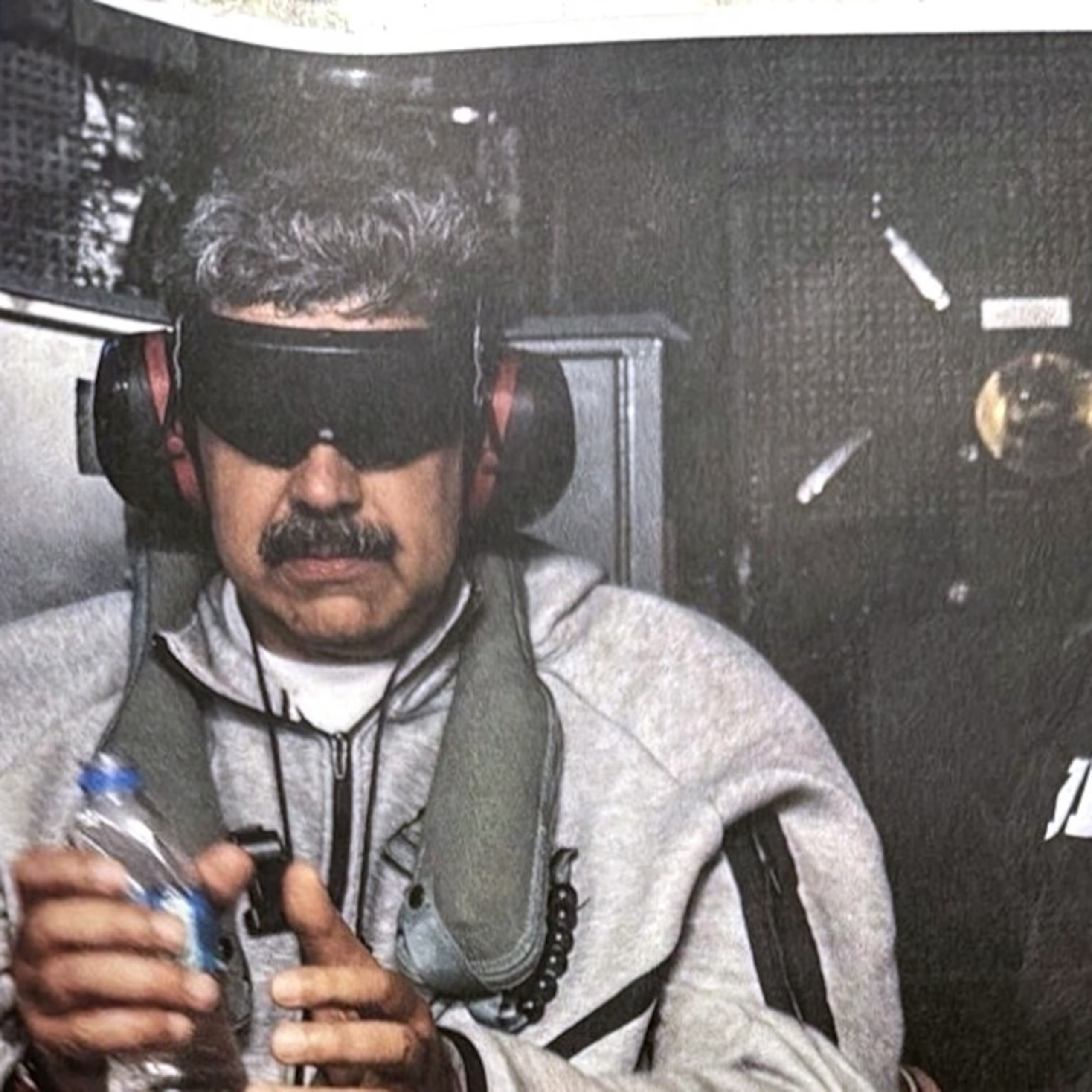
I woke up on Sunday morning to a world that looks fundamentally different than the one we left on Friday. As the Editor here at BDNewsNet, I’ve seen my share of “breaking news,” but the images of Nicolás Maduro and his wife, Cilia Flores, being led off a plane in New York by US federal agents is something I never thought I’d see in 2026 .

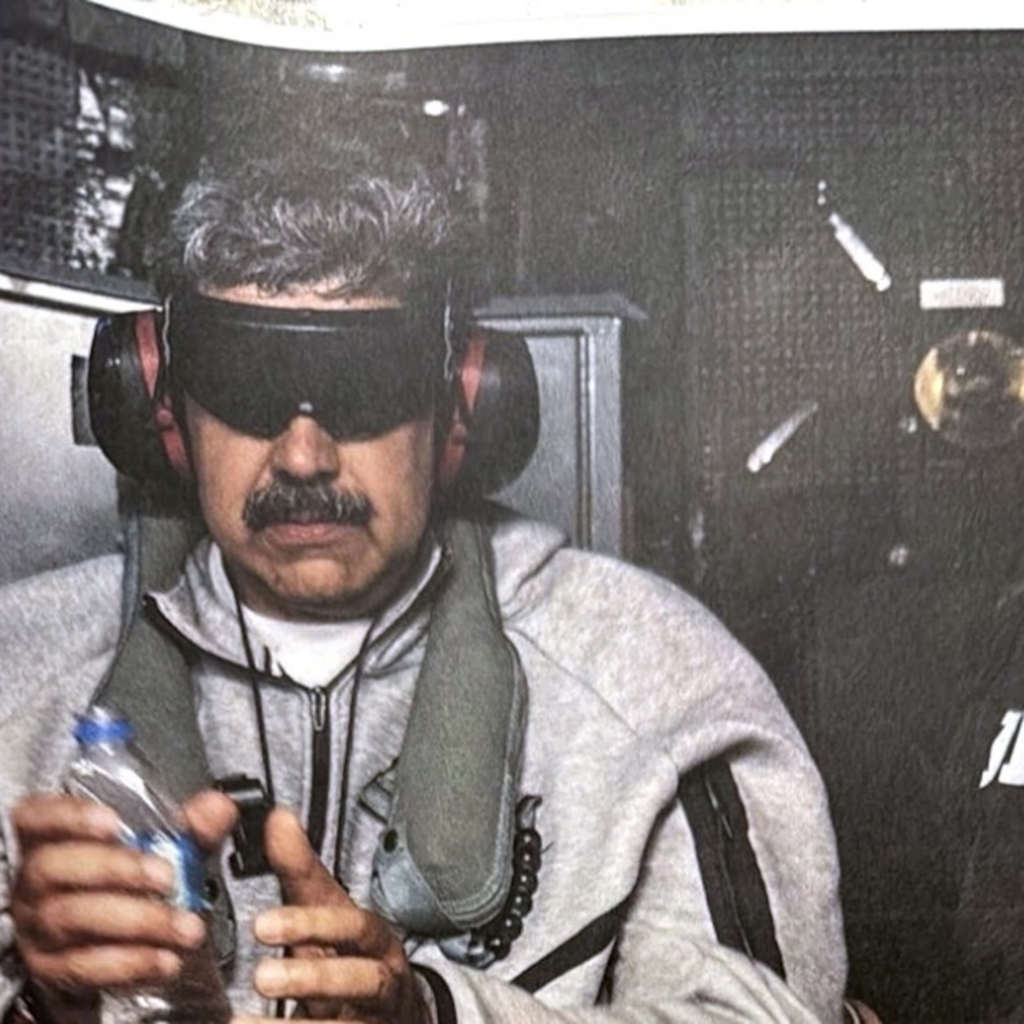
The spectacle of Nicolás Maduro and his wife being flown to New York under the banner of a U.S. “law enforcement extraction” is not just a Latin American story. It is a warning to small states everywhere. When warplanes, cyber blackouts, and military incursions are dressed up as serving a warrant, the rules of sovereignty are rewritten.
Drug overdoses become an act of war, justifying a military response.
The US administration is calling it a “law enforcement extraction.” But you don’t need 150 warplanes and a cyber blackout to serve a warrant. You do need them to invade a country.
January 2026 has forced many to confront an uncomfortable idea: the “Putinization” of US policy, where a powerful nation uses force to change the government of a neighbor it deems a security threat. For decades, Washington condemned that logic abroad. Now, critics argue, the U.S. may be normalizing it.
Operation Absolute Resolve: A Masterclass in Raw Power
Under the cover of darkness on January 3rd, 2026, U.S. Special Forces swept into Caracas, captured a man the U.S. calls a “narco-terrorist” dictator, and flew him to a jail cell in Brooklyn.U.S. forces didn’t just “intervene”—they decapitated the Venezuelan state. Codenamed “Operation Absolute Resolve,” the mission was a display of overwhelming tactical superiority
But dig just an inch beneath the triumphant rhetoric, and a far more unsettling picture emerges. It’s a picture of helicopters skimming waves at 100 feet, of cyber-attacks plunging a capital into darkness, of a foreign leader announcing he will now “run” a sovereign country and control its oil. It’s the sound of a long-standing international order—flawed as it was—groaning under the weight of a new, raw precedent.
Operation Absolute Resolve: Liberation or Lawless Power Grab , What about us ?
This storyline forces me to rethink our own neighborhood. What if one day India, our closest neighbor, decides it does not like the political condition in Dhaka? What if it points a finger at our Prime Minister, accusing him of aiding separatists, and launches a “law enforcement extraction” of its own?
Would the world—or even our greatest friend, the United States—tell India to stop its nonsense and obey international law? Does Washington have the moral ground to say so while it is promoting the very logic it once condemned?
January 2026 may be remembered as the month when the rules of sovereignty were rewritten. For Bangladesh, the lesson is clear: if the world accepts “Putinization” in one hemisphere, it may one day arrive at our doorstep.
The Brutal Calculus – A U.S. Anchor or a Pakistani Pact?
If the U.S. normalizes this doctrine, then Bangladesh must assume that others may follow. Sovereignty becomes negotiable, and Dhaka could be next in line.
Forget the old songs about non-alignment and friendship to all. That was for a gentler world. The Venezuela operation shows the new game, power projection dressed up as law enforcement.For a country sitting in the Bay of Bengal, boxed in by giants, polite non-alignment is starting to look like a luxury we can’t afford anymore
We’ve basically got two cards to play. Both are bad. We just have to pick which bad we can live with.
Option 1: The American Anchor — Cutting a Deal with the Leviathan
An American base is the ultimate “keep out” sign. It basically ends the discussion about Indian adventurism overnight. Delhi would have to be insane to risk a confrontation with the U.S. over a border skirmish or water dispute with us. The cost becomes infinite.
Sovereignty, redefined.
Let’s be honest: we’d lose freedom on some internal decisions. Washington will have opinions. Loud ones. On China, governance, elections, all of it.
But our borders? Those become untouchable. As protected as Guam or Okinawa. Ugly trade, yes — but effective.China walks away. BRI cash dries up.We’d be choosing one master over two, but at least the master is the strongest one. The alienation is total, but it’s clean
The Problem: This option isn’t ours to simply choose. We have to be wanted. Would the U.S., post-Venezuela, want to take on such a direct, tense commitment in India’s backyard? They might prefer us as a loose partner, not a formal base. If they say no, this whole plan collapses, and we are left exposed, having publicly signaled our desperation.
Option 2: The Pakistani Pact – A Bond in Mutual Vulnerability
If the American door is closed, the only other realistic military counterweight is a full mutual defense treaty with Pakistan. This is the Saudi-Pakistan model, made blood-deep by our shared history.
The Even More Brutal Logic:
- It Creates a Two-Front Reality for India. This is its sole, terrifying purpose. It binds the Indian military in a strategic pincer. An Indian move on Dhaka means opening a second, massive front with Rawalpindi. For India, it’s a strategic nightmare they’ve spent 50 years trying to avoid.
- It’s Culturally and Militarily Plausible. Our armed forces have deep fraternal ties. The interoperability is easier than with a Western power. There’s a shared religious and historical narrative that can be leveraged for domestic political support.
The Catastrophic Downside: This isn’t just deterrence; this is binding our destiny to a nuclear flashpoint. We are not just getting a security partner; we are permanently embedding ourselves in the India-Pakistan conflict. Any crisis in Kashmir, any terrorist attack in Mumbai, any skirmish on the LoC—we are now treaty-bound to potentially be drawn in.
And here’s my deepest fear: In a major India-Pakistan war that goes nuclear, the missiles won’t fly over our heads. We will be the battlefield. India would seek to neutralize the eastern front first and fast—not with nukes necessarily, but with a devastating conventional blitz to knock us out of the war immediately. A pact with Pakistan doesn’t just risk war; it guarantees that if the worst happens, the full fury of the conflict lands here. We become the Flanders Fields of South Asia.
My Conclusion: The Lesser of Two Evils
This is a choice between:
Selling chunks of strategic autonomy to a distant superpower
or
- Tying our survival to a neighbor locked in permanent conflict
The U.S. base option, if available, is the lesser evil. It’s colder, more transactional, and sacrifices our “friendship to all” ideal completely. But the threat is remote political influence from Washington, not imminent conventional bombardment from across our border. The primary deterrent (the U.S. military) is also the one least likely to actually have to fight, because its very presence prevents the war.
You know, there’s one last, uncomfortable truth we have to swallow. Washington might not see us as a partner—not in the way we’d want. After Venezuela, they see countries as assets or liabilities. We’d be an asset: a strategic location, a warm-water port, a piece on the board.
They won’t trust us with their secrets, and they might not respect our internal choices. But in this brutal new playbook, maybe that’s okay. Maybe we don’t need their trust; we need their interest. A base isn’t friendship. It’s a business deal. They get a foothold in the Bay of Bengal; we get an invisible shield no regional power dares cross.
If they won’t stand with us as an ally, let them stand on us as a garrison. It’s not dignified. But in an undignified world, where the “Putinization” of policy is the new normal, a leased dock and a runway might be the last, best defense of our soil we have left .
Our next government’s first task must be to secure our future, not just manage our present. The time for strategic ambiguity is over. The time for a hard choice has begun .
A deal with a distant evil might be necessary to ward off a nearer one.
This opinion piece is written by Aziz Tarak. Everything stated here reflects solely his personal views, analysis, and concerns. It is meant as food for thought, not a definitive policy prescription. The author strongly believes in freedom of expression and open debate, especially on difficult and uncomfortable topics. Readers are encouraged to disagree, question, and think critically.

